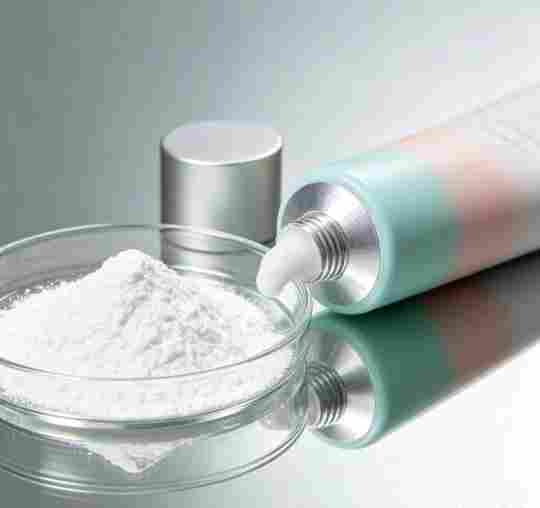
Essential details
Quantity(pieces):10
MOQ:10T
Lead time:15Days
Shipping:sea transportation
Specification Number:Precipitated silica for toothpaste ZLDIO
Package Description:Woven bag or valve pocket packaging
Product Introduction
Toothpaste Grade Abrasive Silica | High-Efficiency Stain Removal for Whitening Formulations
What Is Toothpaste Grade Abrasive Silica, and Why Is It Used in Whitening Toothpaste?
1. Product Overview
What Is the Chemical Nature of This Abrasive Silica?
The product is an amorphous precipitated hydrated silica, produced by a controlled wet precipitation process from soluble silicate and acid raw materials. It is not crystalline silica and does not contain quartz or cristobalite at hazardous levels, which is a key safety consideration for oral care raw materials. The structure consists of a porous silica network bearing surface silanol (Si–OH) groups, which determine its dispersibility, thickening behavior, oil absorption, and interaction with other formulation ingredients.
What Is the Product Designed to Do?
Our high-abrasion whitening-grade silica is formulated for two core functions:
Extrinsic stain removal: lifting and dispersing surface stains caused by coffee, tea, red wine, tobacco, food colorants, and daily plaque accumulation.
Enamel polishing: smoothing the tooth surface after cleaning to reduce roughness, slow re-staining, and support a bright, polished visual appearance.
The abrasion level is controlled so that cleaning power and dental safety are balanced rather than maximized at the expense of enamel protection.
Who Is This Product Suitable For?
customized whitening toothpaste brands and daily deep-cleaning toothpaste lines.
Contract manufacturers (OEM/ODM) producing multiple oral care SKUs.
Professional dental polishing pastes and at-home whitening system producers.
Regional oral care companies seeking stable bulk supply and customizable particle size and RDA levels.
2. How Does Whitening Abrasive Silica Work?
What Is the Stain-Removal Mechanism?
Stains on teeth are mostly extrinsic: they adhere to the plaque and pellicle layer on the enamel surface rather than sitting inside the tooth. Abrasive silica works through three combined mechanisms:
1.Mechanical micro-abrasion: controlled, rounded particles gently abrade the stained pellicle and plaque layer during brushing.
2.Adsorption: the porous silica surface and silanol groups adsorb stain particles and colored compounds, helping them detach from the tooth surface and remain dispersed in the paste.
3.Polishing: after stain removal, the particle morphology smooths the enamel surface, reducing micro-roughness where new stains can re-adhere.
What Does RDA Mean, and Where Does This Product Sit?
How Is the Abrasion Profile Controlled?
The abrasion profile is managed through:
A narrow particle size distribution, avoiding oversized sharp particles that cause excessive wear.
Controlled particle morphology and porosity, balancing cleaning efficiency with gentle polishing.
Consistent BET surface area and DBP oil absorption, which govern how the silica disperses in the paste and how it interacts with humectants and active ingredients.
Online particle size monitoring and batch-to-batch RDA verification during production.
3. Product Technical Specifications
Full Parameter Table
Item Specification
Core Material Amorphous precipitated hydrated silica
SiO₂ Content (Ignited Basis) ≥ 97.5%
Loss on Ignition (1000 °C, 1 h) ≤ 8.0%
Moisture (As Packed, 105 °C, 2 h) 3.0 – 5.5%
pH (5% Water Suspension) 6.5 – 7.3
Bulk Density 0.20 – 0.28 g/cm³
DBP Oil Absorption 80 – 120 cm³/100 g
Median Particle Size (D50) 10 – 15 μm
BET Surface Area 100 – 140 m²/g
Whiteness (CIE L*) ≥ 97.5
RDA Value 120 – 150
Arsenic (As) ≤ 1 ppm
Lead (Pb) ≤ 2 ppm
Mercury (Hg) ≤ 0.5 ppm
Total Aerobic Plate Count ≤ 50 cfu/g
Primary Application Whitening toothpaste abrasive, enamel polishing agent
Standard Packaging 10 / 15 / 20 kg export-standard waterproof kraft paper bag
Trade Terms5% (ignited basis): reflects high purity and low non-silica impurities, supporting consistent appearance and performance.
Moisture 3.0–5.5%: controlled residual moisture keeps the powder free-flowing and stable in the bag, while avoiding excess water that could affect paste consistency.
pH 6.5–7.3: near-neutral suspension, suitable for compatibility with fluoride and other neutral-to-mild oral care actives.
Bulk density 0.20–0.28 g/cm³: typical low-density porous silica range, relevant to dosing, dispersion, and paste rheology.
DBP oil absorption 80–120 cm³/100 g: indicates the porosity and liquid-carrying capacity of the particles, which influences paste structure and humectant demand.
BET 100–140 m²/g: defines the internal and external surface area, linked to adsorption capacity and particle interaction in the formulation.
Whiteness L ≥ 97.5:* high lightness that preserves the white appearance of the toothpaste base and supports optical brightening in whitening formulations.
Heavy metal and microbial limits: controlled arsenic, lead, mercury, and total aerobic plate count to meet customized oral care safety requirements.
4. Core Product Features
4.1 Optimized Abrasion Profile
The silica is engineered with a narrow particle size distribution and controlled particle morphology. This design provides efficient removal of extrinsic stains without excessive enamel wear, balancing cleaning power and dental safety. Manufacturers can adjust the final abrasivity by blending this high-abrasion grade with a low-abrasion toothpaste silica grade to match their target RDA and mouthfeel.
4.2 High Whiteness and Brightness
With CIE L* whiteness at ≥ 97.5 and low impurity content, the material preserves the clean white visual appearance of the toothpaste gel or paste and supports the optical brightening effect expected in whitening formulations. The low color impurity level also reduces the risk of graying or dulling the final product.
4.3 Fluoride Compatible
Under neutral formulation conditions, the silica is chemically inert and shows good compatibility with sodium fluoride, sodium monofluorophosphate (MFP), and other common oral care active ingredients. This compatibility helps maintain stable fluoride availability over the product shelf life, which is a critical formulation requirement for fluoride-containing whitening toothpastes.
4.4 Consistent Batch-to-Batch Quality
Strict online particle size monitoring and in-process quality control ensure consistent RDA values and cleaning performance across production batches. This stability reduces the need for repeated formulation adjustment on the manufacturer's side and supports predictable scale-up from laboratory trials to mass production.
4.5 Controlled Impurity and Microbial Levels
Heavy metals (arsenic, lead, mercury) and total aerobic plate count are monitored against defined limits on every batch. This level of control supports qualification by customized oral care brands and simplifies regulatory dossier preparation in destination markets.
4.6 Customizable Particle Size and RDA
Beyond the standard grade, we offer flexible particle size and RDA customization to match different whitening strengths, from daily brightening toothpastes to high-efficiency stain-removal and professional polishing products.
5. Core Advantages Over Conventional Abrasives
What Are the Main Commercial and Technical Advantages?
Professional whitening grade: formulated specifically for stain removal and polishing, rather than using a general-purpose filler silica.
Industry-relevant cleaning efficiency: optimized abrasion profile targeted at coffee, tea, tobacco, and food-stain removal.
Strict impurity control: heavy metal and microbial limits aligned with customized oral care safety expectations.
Formulation flexibility: particle size and RDA can be tailored; the grade can be used alone or blended with low-abrasion silica.
Complete technical documentation package: TDS, MSDS/SDS, COA, and method validation reports to support formula development and regulatory declaration.
Stable bulk supply: production capacity designed for large-scale whitening toothpaste manufacturing, with dependable lead times for repeat orders.
Global market orientation: packaging, documentation, and trade terms are prepared for export to Europe, North America, Southeast Asia, and other oral care markets.
OEM/ODM-friendly: consistent quality and full documentation support contract manufacturers serving multiple brand clients and product SKUs.
How Does Silica Compare With Other Common Toothpaste Abrasives?
Abrasive Type Typical Characteristics Where Precipitated Silica Adds Value
Precipitated silica (this product) Controlled particle size, adjustable RDA, high whiteness, good fluoride compatibility, mild polishing Tunable abrasion, transparent/white gel compatibility, clean mouthfeel, stable fluoride performance
Calcium carbonate Low cost, high hardness, relatively high abrasion; can be less compatible with some fluoride systems Silica offers better abrasion control and fluoride compatibility for customized whitening lines
Hydrated alumina Hard polishing abrasive, often used in specific polishing pastes Silica provides a broader balance of cleaning, polishing, and dispersion for toothpaste gels and pastes
Diatomaceous earth / natural minerals Variable natural composition and impurity profile Precipitated silica offers synthetic, batch-controlled purity and consistent specifications
Manufacturers often combine two silica grades — a high-abrasion whitening grade and a low-abrasion cleaning/polishing grade — to fine-tune RDA, viscosity, and mouthfeel in the final toothpaste.
6. Formulation and Usage Instructions
6.1 Recommended Addition Ratio
Reference dosage should be assessed against the target RDA, paste viscosity and other abrasives, and confirmed by trial with your own formula.
6.2 Blending Guidance
1.Add in the dry powder stage: introduce the silica during the dry powder blending step, before liquid humectants and active solutions are added.
2.Mix with humectants first: blend thoroughly with humectants (such as sorbitol, glycerin, or polyethylene glycol) before adding liquid components to avoid wetting-out problems and lumping.
3.Ensure uniform dispersion: mix until the powder is fully and uniformly dispersed; avoid particle agglomeration in the finished paste, as undispersed clusters can cause gritty mouthfeel and uneven abrasion.
4.Check final RDA: measure the finished product RDA after formulation to confirm it matches the target abrasivity and positioning.
5.Blend with low-abrasion silica if needed: for daily-use or sensitive-teeth positioning, combine this grade with a lower-abrasion silica to bring the overall RDA into the desired range.
6.3 Compatibility Notes
Compatible with common humectants, thickeners (e.g., carboxymethyl cellulose, xanthan gum, carrageenan), sweeteners, flavors, and color systems used in toothpaste.
Designed for compatibility with sodium fluoride and sodium monofluorophosphate; final fluoride stability should be verified in the finished product over shelf life.
pH of the formulation should remain in the near-neutral range; extreme pH conditions may affect silica behavior and active ingredient stability.
For new formula development, a laboratory trial followed by stability testing (temperature cycling, fluoride retention, viscosity, and appearance) is recommended before commercial scale-up.
6.4 Storage and Shelf Life
Store in sealed packaging in a cool, dry environment, protected from moisture, direct sunlight, and strong odors.
Keep bags closed after partial use to prevent moisture absorption and particle agglomeration.
Avoid stacking conditions that compress or damage the waterproof kraft packaging.
Under proper sealed storage conditions, the product retains its specified moisture, particle size, and flow characteristics; confirm the exact shelf life on the TDS or COA for each lot.
7. Application Scenarios
7.1 customized Whitening Toothpaste Brands
Designed for specialty whitening toothpaste lines, the silica delivers visible stain removal and polishing effects in smokers' toothpaste, coffee-stain and tea-stain removal products, and professional at-home whitening formulations.
7.2 Daily Deep-Cleaning Toothpaste Lines
Suitable for mainstream daily cleaning toothpastes that require enhanced plaque removal and surface polishing, supporting both mint and multi-flavor systems, including gel, striped, and opaque paste formats.
7.3 Professional Dental Care Products
Compatible with professional dental polishing pastes and at-home whitening systems, subject to dental industry safety and performance standards applicable in the target market.
7.4 Oral Care Brand OEM/ODM Manufacturing
7.5 Other Potential Oral Care Uses
Whitening tooth gels and syringes for at-home whitening kits.
Polishing components in dual-phase or dual-abrasive toothpaste systems.
Base abrasives for children's or family toothpastes where a lower RDA blend of this grade with a low-abrasion silica is formulated.
8. Qualifications, Compliance, and Documentation
8.1 Quality and Documentation
Oral Care Raw Material Supplier Qualification.
8.2 Technical Documentation Provided
For every commercial order and trial request, we can supply:
TDS (Technical Data Sheet): typical specifications, properties, and application guidance.
MSDS / SDS (Material Safety Data Sheet): safety, handling, storage, and disposal information.
COA (Certificate of Analysis): batch-specific test results against specification limits.
Method validation reports: supporting test methodology documentation for customer formula validation and regulatory declaration.
Additional market-specific documentation (e.g., regional compliance statements) can be discussed per destination market.
8.3 Traceability and Quality Control
Every batch is produced under strict quality management with full traceability from raw material to finished product. Incoming raw material inspection, in-process particle size and moisture monitoring, finished-product specification testing, and retained sample records support traceability and customer audit requirements.
9. Company Profile and Supply Capability
9.1 Who Is Zhongqi Shandong Silicon Material Co., Ltd.?
Zhongqi Shandong Silicon Material Co., Ltd. is a China-based professional manufacturer of functional silica raw materials for oral care, food, pharmaceutical, personal care, coating, packaging, and feed applications. Our toothpaste-grade silica portfolio includes high-abrasion whitening grades, low-abrasion cleaning and polishing grades, and thickening/structuring silica grades, supporting a full range of toothpaste and oral care formulations.
9.2 Product Portfolio Context
Beyond toothpaste-grade abrasive silica, our silica materials serve multiple industrial tracks, including food-grade and food adsorbent applications, pharmaceutical excipients, packaging antiblocking agents, coating matting agents, feed-grade carriers, and specialty precipitated and fumed silica grades. This broad application background supports technical understanding of formulation behavior across consumer products.
9.3 Customization and Bulk Supply
Particle size customization: D50 and particle distribution can be adjusted to target abrasivity and mouthfeel.
RDA tailoring: abrasivity levels can be matched to daily-use, brightening, or high-efficiency whitening positioning.
Bulk capacity: stable supply for large multinational brands and regional customized oral care companies.
Trial support: small trial quantities and technical cooperation for formula development before volume orders.
9.4 Packaging and Trade Terms
Standard packaging: 10 kg, 15 kg, or 20 kg export-standard waterproof kraft paper bags; palletized or container-loaded options available on request.
Trade terms:
Lead time and logistics: production scheduling, shipment documentation, and export packaging are arranged to support the customer's planning cycle; specific lead times are confirmed per order quantity and destination.
10. Frequently Asked Questions (FAQ)
Q1: What is toothpaste grade abrasive silica made of?
It is an amorphous precipitated hydrated silica (SiO₂·nH₂O), produced by a controlled wet precipitation process. It is synthetic, batch-controlled, and supplied as a white powder for toothpaste and oral care formulations.
Q2: What is the difference between this whitening-grade silica and a regular toothpaste silica?
This grade is optimized for stain removal and polishing, with a higher abrasion profile (RDA 120–150) and a D50 of 10–15 μm. Regular or low-abrasion silica is used for gentler daily cleaning, thickening, or structure building. The two are often blended to fine-tune final RDA and mouthfeel.
Q3: What RDA range does this product have, and is it safe for daily use?
The standard grade has an RDA of 120–150, a medium-to-high whitening abrasivity range. Final daily-use suitability depends on the finished formulation, dosage, blending with lower-abrasion silica, and the regulations of the target market. We recommend measuring finished-product RDA and conducting safety review before launch.
Q4: Is the silica compatible with fluoride toothpaste?
Yes. The material is designed to be compatible with sodium fluoride and sodium monofluorophosphate under neutral formulation conditions. Finished-product fluoride retention should still be verified through shelf-life stability testing.
Q5: What dosage is typically used in a whitening toothpaste formula?
Reference dosage should be assessed against the target RDA, paste viscosity and other abrasives, and confirmed by trial with your own formula.
Q6: Can the particle size or RDA be customized?
Yes. We offer flexible particle size and RDA customization for different whitening strengths, from daily brightening products to high-efficiency stain-removal and professional polishing formulations.
Q7: What certifications and documentation are available?
Q8: Does this product contain crystalline silica, heavy metals, or microbial contamination above limits?
The product is amorphous hydrated silica. Arsenic is controlled to ≤1 ppm, lead to ≤2 ppm, mercury to ≤0.5 ppm, and total aerobic plate count to ≤50 cfu/g, with batch-specific results listed on the COA.
Q9: How should the silica be stored?
Keep it sealed in a dry, cool environment away from moisture, direct sunlight, and strong odors. Reseal bags after partial use to prevent moisture absorption and agglomeration.
Q10: What packaging and trade terms are available for export?
Standard export packaging is 10/15/20 kg waterproof kraft paper bags. Trade terms include
Q11: Can this silica be used in gel toothpaste?
Yes. High whiteness (L* ≥97.5) and controlled particle size support use in white and transparent gel systems, provided dispersion and refractive behavior are verified in the specific gel formulation.
Q12: Which markets is this product supplied to?
The silica is adopted in whitening toothpaste formulations across Europe, North America, and Southeast Asia, and can be supplied to other oral care markets subject to local regulatory requirements.
Q13: What technical support do you provide for new formula development?
We provide TDS, SDS, COA, and method validation reports, along with formulation guidance on dosage, blending order, and silica grade selection. Trial quantities and scale-up support are available for qualifying customers.
Q14: Is this silica suitable for OEM/ODM toothpaste manufacturing?
Yes. Stable batch-to-batch quality, full documentation, and customizable specifications make it suitable for contract manufacturers serving multiple brand clients and product SKUs.
Q15: How is product quality guaranteed across batches?
Online particle size monitoring, in-process quality control, finished-product specification testing, retained samples, and traceability from raw material to finished product support consistent RDA and cleaning performance across batches.
11. Compliance and Labeling Notes for Brand Owners
Raw material compliance documentation supports, but does not replace, finished-product regulatory assessment in the destination market.
Claims such as "whitening," "stain removal," and safety-related statements on consumer packaging should be reviewed against local cosmetic/dental product regulations before publication.

